
Supporting the Healthcare Workforce
Who it Affects
Healthcare workers are the backbone of our nation’s hospitals and health systems. But finding and retaining workers has become more difficult since the pandemic, and staffing expenses have increased as a result. Rising labor costs threaten access to the care patients need and deserve.

The Problem
Critical workforce shortages and labor costs are hurting hospitals’ ability to provide for patients.1
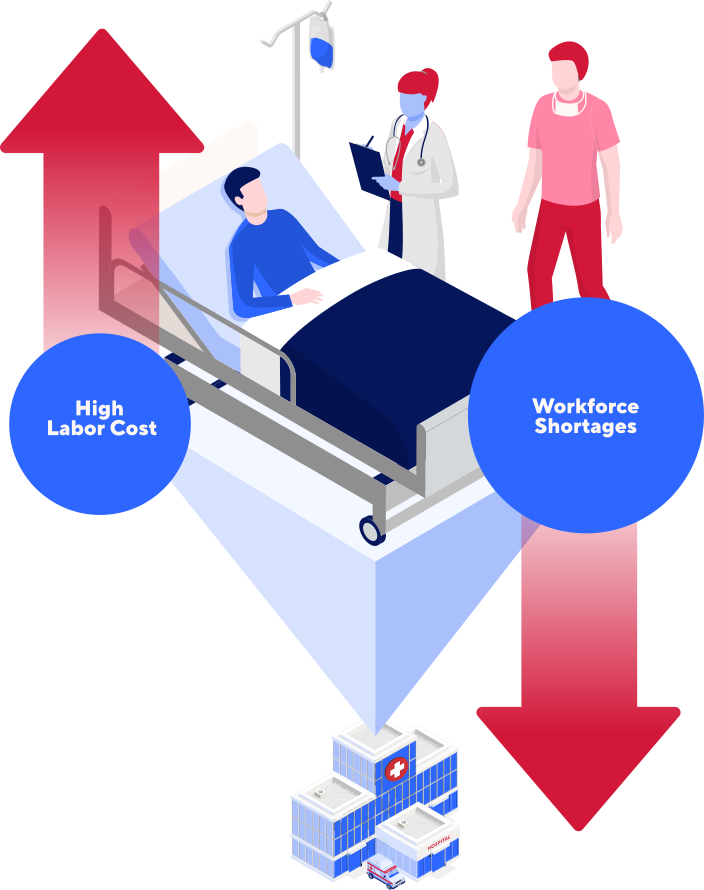
workforce shortages
As 24/7 providers of high-quality, life-saving care, hospitals and health systems need large numbers of qualified caregivers and medical professionals around-the-clock.
Finding and retaining these workers has become increasingly difficult due to a range of factors, including a shortage of nursing school faculty, burnout, and the lingering effects of the pandemic. Physician demand is projected to continue to grow faster than supply, leaving the U.S. with a physician shortage of 86,000 by 2036. The issue is even more acute in rural areas, where fewer physicians care for more people.
growing demand
To meet growing care demands and ensure access to care amid this workforce shortage, hospitals are often forced to rely on expensive contract labor.
On top of Medicare and Medicaid underpayments, rising labor costs can force hospitals to reduce or close certain services lines, such as maternity care, or to shut down altogether.
Administrative burdens placed on healthcare workers by commercial insurers are driving high burnout rates and keeping workers from their patients.
High burnout
According to the American Medical Association, 48.2% of physicians reported experiencing at least one symptom of burnout in 2023. Administrative work is often cited as a primary factor in staff burnout, as healthcare providers struggle to balance billing requirements such as prior authorization and serving their patients.
As administrative expenses grow and take up more time, burnout will continue, and patients could be harmed. On a broader scale, burnout-related physician turnover and reduced clinical hours is estimated to cost the U.S. healthcare system approximately $4.6 billion annually.
The Solution
Congress should work to solve workforce shortages by supporting medical education programs and reducing administrative burdens that lead to burnout, so caregivers can continue to focus on serving patients and their communities.
Sources
1. https://www.syntellis.com/sites/default/files/2023-03/AHA%20Q2_Feb%202023.pdf#page=2
2.
https://trustees.aha.org/physician-burnout-demands-bold-action
3.
https://www.ama-assn.org/practice-management/physician-health/physician-burnout-rate-drops-below-50-first-time-4-years
4.
https://www.aamc.org/media/75236/download?attachment
5.
https://www.bmj.com/content/365/bmj.l2361
6.
https://www.aha.org/role-hospitals-denver-health-focuses-primary-care-training-underserved-areas