
Funding Rural Health
Who it Affects
Nearly 150 rural hospitals have closed or converted since 2010 alone.

Many of these are the only hospitals in their area — and often the only source of local care for American families living in rural areas. As Congress continues to debate cuts to Medicaid, Medicare, and so-called “site-neutral” policies, rural communities often feel the effects of these decisions more than anywhere else in the U.S., forcing many to travel even further for high-quality, emergency care. In recent years, 74% of rural hospital closures happened in states where Medicaid expansion was not in place or had been in place for less than a year.
The Problem
Cuts to hospital care resulting from “site-neutral” policies disproportionately affect rural areas and underserved communities, forcing hospitals to shutter critical service lines, such as mental health and maternal health services.
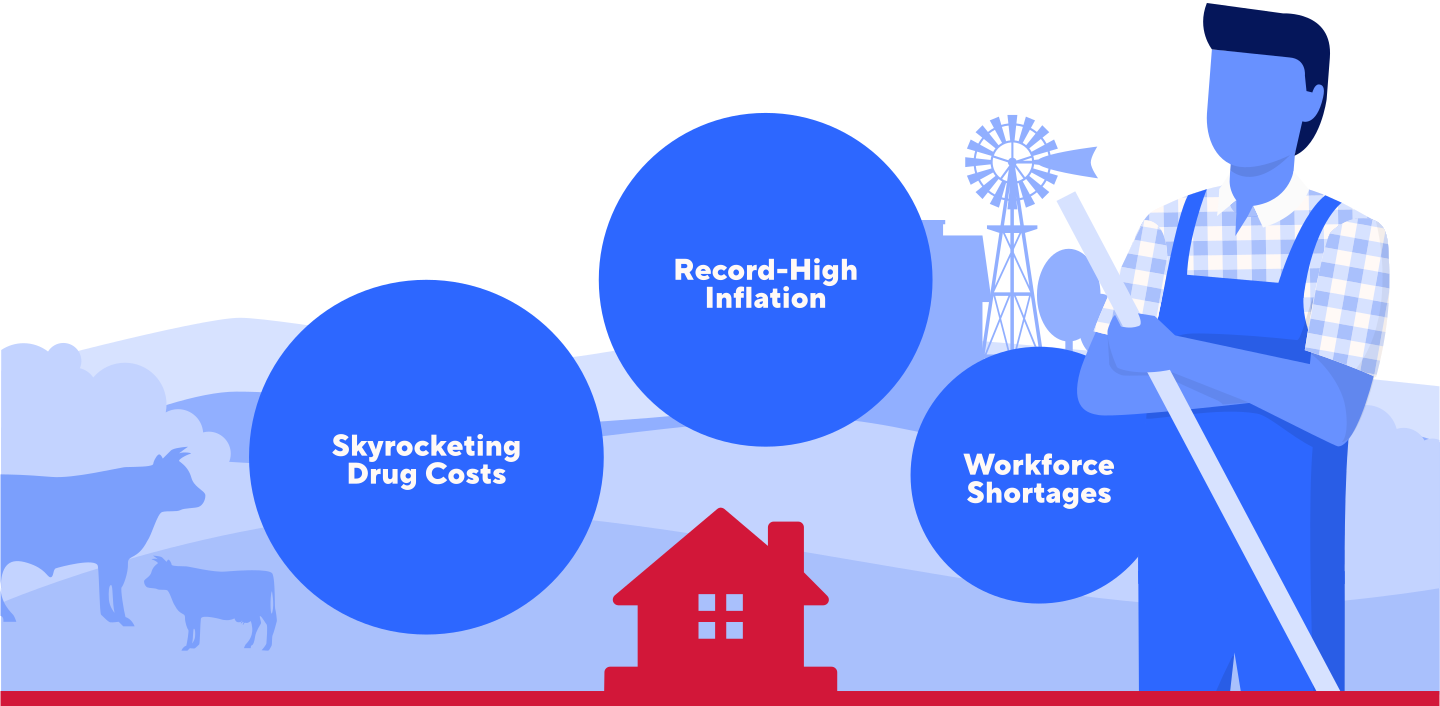
Skyrocketing drug costs, record-high inflation, and workforce shortages that have occurred since the COVID-19 pandemic began have had an outsized impact on rural hospitals, which are already more likely to be at risk of closure.
Forced to cut Programs And Care

Economy-wide inflation – an issue affecting every American – grew more than two times faster than Medicare reimbursement for hospital inpatient care between 2021 and 2023. Cutting Medicare through proposed site-neutral policies and cutting Medicaid funding could force rural hospitals to cut critical services and create hospital deserts.
Mental Health Services
Nearly two-thirds of rural counties do not have a psychiatrist, and more than 8 in 10 do not have a psychiatric nurse practitioner.
Maternity Care
The lack of hospital access has dire consequences for patients seeking maternity care. Both maternal and infant mortality rates in rural areas are consistently higher than in urban ones. Medicaid currently covers about 42% of all births in the U.S.
Medicare Advantage plans that delay and deny care for patients exacerbate underpayment issues for rural hospitals, forcing closures.

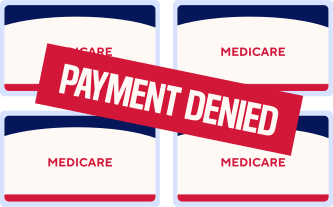
Medicare Advantage plans often submit inflated bills to the public program and repeatedly refuse to reimburse hospitals for the care they provide. In 2022, a federal audit from 2013 was released showing that 8 of the 10 largest plans had submitted inflated bills to Medicare.
While the number of older Americans who rely on Medicare Advantage in rural areas continues to rise, payment denials force hospitals to eat the increasing costs of care, causing some to close operations — leaving residents without access to treatment.
The Economic Fallout
Not only are rural hospitals crucial sites of care in their communities — they’re also economic anchors. In 2020, rural hospitals provided one in 12 rural jobs in the U.S., supporting $220 billion in economic activity. When rural hospitals shutter their doors, community members lose their jobs, and local economies suffer.
The Solution
Cutting hospital care is not a solution to the challenges of healthcare costs and access. Congress should focus on long-term healthcare solutions, such as ensuring fair and adequate reimbursement and bolstering the healthcare workforce, instead of Medicare and Medicaid cuts that threaten access to care for patients – especially in rural and underserved communities.